

Flight Line Test Sets
Also referred to as avionics test equipment, flight line test sets support ADS-B (Automatic Dependent Surveillance-Broadcast) performance testing, utilizing air traffic technology and minimizing reliance on ground-based radar. This equipment can improve the overall safety of air traffic control.
What is ADS-B?
The purpose of avionics test equipment is for testing protocols, such as ADS-B transponders, to verify ATC's capability of receiving, decoding, and displaying messages from the flight line, in accordance to DO-260A/B. The ADS-B standard was established by the FAA in 2020 for aircraft flying within controlled airspace in the U.S., requiring aircraft to include a positioning source as part of their avionics. This standard applies to airlines, private jets, helicopters, turboprops, and ADS-B transponders.
Flight Line Test Sets Functions
Conducting flight line testing can achieve greater efficiency and improvement in optimizing aircraft spacing, direct routing, and situational awareness for air traffic controllers and pilots. General procedures identify the controls, connectors, indicators, and display screens used in individual test modes.
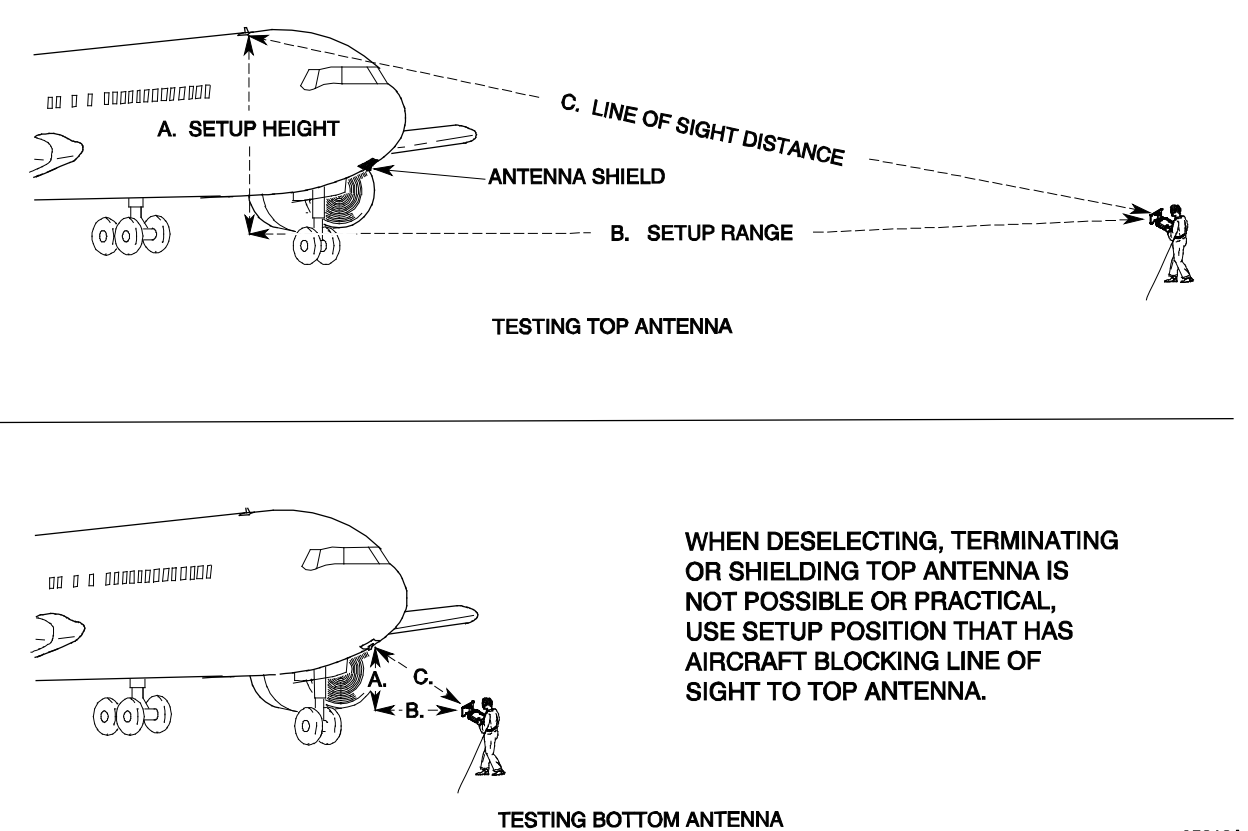
Flight Line Tester Modes
- Transponder Modes
- TCAS I, II, TAS, TIS (Traffic Information Service), and, TIS-B (Traffic Information Service Broadcast)
- ADS-B (DO-260/A/B) and GICB extracted DAP's (Downlinked Aircraft Parameters)
- UAT (ADS-B monitor; FIS-B, TIS-B, and ADS-B generator)
- XPDR Mode (for ATCRBS and Mode S transponders using an Auto Test)
- DME Mode (for distance measuring equipment interrogators)
- UAT Mode (monitor ADS-B messages and generate FIS-B, TIS-B, and ADS-B messages)
- Setup Mode
Avionics Test Equipment Rental
This equipment has a wide range of applications, such as supporting the development, manufacturing, testing, and maintenance of airborne electronic systems—including commercial, private, and military.
- Transponder/DME/TCAS
- Flight line and AOG support
- 717 analysis, test, and simulation
- Avionics validation/testing
- Data recording
Key Features
- Signal generation and monitoring of COMM AM/FM/SSB
- Speed and position status
- Troubleshooting and fault location
- Testing in and around the aircraft
- Over-the-air, direct, or coupled testing
- Measurement of VHF/UHF/HF transmitter, frequency, output power, and modulation
- Swept localizer DDM for coupled autopilot testing
- DME ground station simulation
- UUT parametric tests
- User programmable TCAS scenarios