


IEC
IEC 62619: Safety Requirements for Secondary Lithium Cells and Batteries, for Use in Industrial Applications
IEC 62619 Standard Overview
IEC 62619 discusses the requirements and tests used to safely operate secondary lithium cells and batteries during industrial and stationary applications. This standard is set to lower the risk of battery fires, explosions, and chemical leaks in their respective applications. To account for this, new revisions have stricter requirements for battery management system (BMS) integration and thermal runway prevention.
This standard applies to the first life of cells and batteries; however, there are a couple of exceptions. The first is for batteries that are split into smaller units, in which case the smaller unit will be tested as the battery’s representative. The second is when there is another IEC standard that utilizes cells for special applications which conflict with IEC 62619, the other IEC standard will take precedent.
Within the scope of IEC 62619, some of the applications that are covered include:
• Ensuring voltages are within their safe limits through overcharge protection.
• Maintaining a battery’s integrity and lifespan through over-discharge protection.
• Preventing potential fire hazards via short-circuit protection.
• Abnormal charging and discharging monitoring to ensure operational safety under all conditions.
ATEC rents a variety of devices that can aid in testing cells and batteries. Below are the categories required. Scroll further to view specific products from these categories that can aid in performing testing according to IEC 62619.
This standard applies to the first life of cells and batteries; however, there are a couple of exceptions. The first is for batteries that are split into smaller units, in which case the smaller unit will be tested as the battery’s representative. The second is when there is another IEC standard that utilizes cells for special applications which conflict with IEC 62619, the other IEC standard will take precedent.
Within the scope of IEC 62619, some of the applications that are covered include:
- Stationary applications: electrical energy storage system, emergency power, telecom, uninterruptible power supplies (UPS), utility switching, and similar applications.
- Motive applications: automated guided vehicle (AGV), forklift truck, golf cart, marine vehicles, and railway vehicles, with the exception of road vehicles.
Electrical Safety
Electrical safety focuses on a few different attributes of the cell and battery.• Ensuring voltages are within their safe limits through overcharge protection.
• Maintaining a battery’s integrity and lifespan through over-discharge protection.
• Preventing potential fire hazards via short-circuit protection.
• Abnormal charging and discharging monitoring to ensure operational safety under all conditions.
Thermal Management
For batteries to maintain satisfactory levels of safety and performance, they must remain stable under extreme temperatures that may be encountered during travel.Mechanical Durability
When RVs travel, the batteries within the vehicle will absorb a variety of shocks, vibrations, and impacts. This standard mandates that batteries must be able to handle these impacts without compromising it’s structure or function.ATEC rents a variety of devices that can aid in testing cells and batteries. Below are the categories required. Scroll further to view specific products from these categories that can aid in performing testing according to IEC 62619.
- Battery Cyclers/BMS Testers - For charging/discharging, capacity, life, and performance under various conditions.
- Environmental Chambers - To test performance and safety in extreme temperatures, humidity, etc.
- Data Acquisition (DAQ) - High-speed recording of temperature (thermocouples), voltage, current, pressure.
- Electrical Safety Testers - For insulation resistance, high potential (hipot), grounding.
- EMC/EMI Test Equipment - To ensure electromagnetic compatibility.
Products Used in Testing
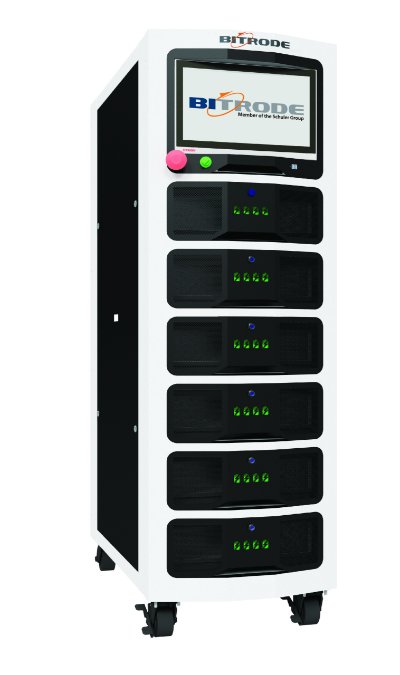
Bitrode BTDC Digital Cycler
- 16 channels of 300 A continuous current
- Data acquisition rate of 1 ms
- Rise Time (current): 1 ms or less

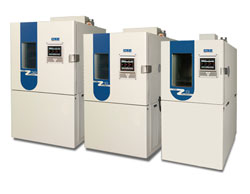
Cincinnati Sub-Zero ZPH Temperature & Humidity Chamber Series
- Temp Range: -70°C - 190°C
- Workspace Volume: 8ft³ - 96ft³
- Hum Range: 10% - 98%RH

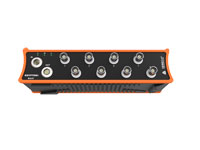
Dewesoft Krypton 8XLV DAQ System
- Self-Developed Profile
- Data Butter
- Plug and Play

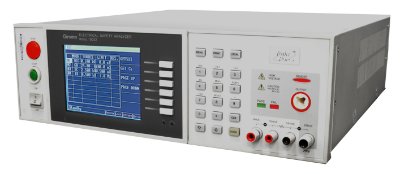
Chroma 19032 Sentinel I Electrical Safety Analyzer
- AC Output Voltage: 0.05 - 5kV
- DC Output Voltage: 0.05 - 6kV
- Resistance Resolution: 0.1mΩ

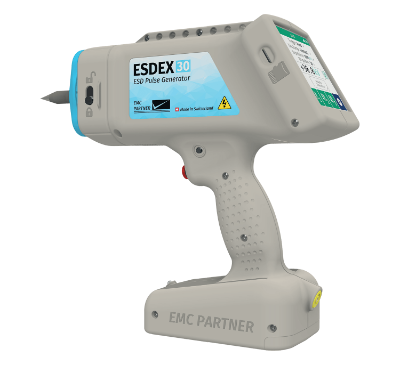
EMC Partner ESDEX Generators Series
- Output Voltage: Up to 30 kV
- Positive, Negative, Alternating
- Interchangeable RC Networks

Related IEC Standards
Explore All Standards
IEC 60050-444 International Electrotechnical Vocabulary Part 444: Elementary Relays
IEC 60255: Electrical Relays
IEC 60270: Partial Discharge Measurements
IEC 60533: EMC Testing of Ships with Metallic Hulls
IEC 60601-1-2: Medical Electrical Equipment - Collateral standard: Electromagnetic compatibility...
IEC 61000-3-2: Limits - Limits for Harmonic Current Emissions (equipment input current up to and...
IEC 61000-3-3: Limits - Limitation of voltage changes, voltage fluctuations and flicker in public...
IEC 61000-3-11: Limits - Limitation of voltage changes, voltage fluctuations and flicker...
IEC 61000-3-12: Limits for harmonic currents produced by equipment connected to public...
IEC 61000-3-13: Electromagnetic compatibility (EMC) Limits - Assessment of emission limits for...
IEC 61000-4-2: Electrostatic Discharge Immunity Test
IEC 61000-4-3: Radiated, radio-frequency, electromagnetic field immunity test
IEC 61000-4-4: Electrical Fast Transient (EFT) / EMC Burst Immunity Test Standard
IEC 61000-4-5: Testing and Measurement techniques - Surge Immunity Test
IEC 61000-4-6: Immunity to Conducted Disturbances, Induced by Radio Frequency Fields
IEC 61000-4-7: General Guide on Harmonics and Interharmonics Measurements and Instrumentation
IEC 61000-4-8 Electromagnetic Compatibility (EMC) - Part 4-8: Testing and Measurement Techniques...
IEC 61000-4-9 Electromagnetic Compatibility (EMC) - Part 4-9: Testing and Measurement Techniques...
IEC 61000-4-10: Testing and Measurement Techniques Damped Oscillatory Magnetic Field Immunity Test
IEC 61000-4-11: Testing and Measurement Techniques - Voltage Dips, Short Interruptions and...
IEC 61000-4-12: Testing and measurement techniques - Ring wave immunity test
IEC 61000-4-13: Testing and measurement techniques - Harmonics and interharmonics including mains...
IEC 61000-4-14: Testing and measurement techniques - Voltage fluctuation immunity test
IEC 61000-4-15: Testing and Measurement Techniques - Flickermeter. Functional and Design...
IEC 61000-4-16: Testing and Measurement Techniques – Test for Immunity to Conducted, Common Mode...
IEC 61000-4-17: Testing and measurement techniques - Ripple on d.c. input power port immunity test
IEC 61000-4-18: Testing and measurement techniques – Damped oscillatory wave immunity test
IEC 61000-4-19: Test for Immunity to Conducted, Differential Mode Disturbances and Signaling
IEC 61000-4-20 Electromagnetic compatibility (EMC) – Part 4-20: Testing and measurement techniques...
IEC 61000-4-21 Electromagnetic compatibility (EMC) Part 4-21: Testing and measurement techniques...
IEC 61000-4-27: Unbalance, immunity test
IEC 61000-4-28: Testing and measurement techniques - Variation of power frequency, immunity test
IEC 61000-4-29 Electromagnetic compatibility (EMC) - Part 4-29: Testing and measurement...
IEC 61000-4-30: Testing and Measurement Techniques - Power Quality Measurement Methods.
IEC 61000-4-31: Testing and measurement techniques - AC mains ports broadband conducted disturbance
IEC 61000-4-34: Testing and Measurement Techniques - Voltage Dips, Short Interruptions...
IEC 61000-4-39:2017: Electromagnetic Compatibility Immunity Requirements
IEC 61000-6-2: Immunity Testing of Industrial Equipment
IEC 61000-6-4: Emission standard for industrial environments
IEC 61000-6-5: Immunity for Power Station and Substation Environments
IEC 61010-1: Safety of Measuring, Control and Laboratory Equipment
IEC 61326: EMC Testing of Laboratory Equipment
IEC 61340-3-1: Methods for Replication of Electrostatic Effects - Human Body Model (HBM)...
IEC 61340-3-2: Methods for Replication of Electrostatic Effects – Machine Model (MM)...
IEC 61672-1: Electroacoustics – Sound level meters – Part 1: Specifications
IEC 61672-2: Electroacoustics – Sound level meters – Part 2: Pattern evaluation tests
IEC 61672-3: Electroacoustics – Sound level meters – Part 3: Periodic tests
IEC 61850: Communication Networks and Systems in Substations
IEC 62037: Passive RF and Microwave Devices, Intermodulation Level Measurement
IEC 62233: Electromagnetic Fields of Household Appliances and Similar Apparatus with Regard to Human
IEC 62764-1: Low-Frequency Magnetic Fields