


ECSS
ECSS-E-ST-20-07C Rev. 2 - Electromagnetic Compatibility
ECSS-E-ST-20-07C Rev. 2 - Electromagnetic Compatibility Standard Overview
ECSS-E-ST-20-07C is a European EMC testing standard that ensures space systems or equipment can function properly in their electromagnetic environment while also not emitting electromagnetic disturbances that could harm other equipment in that environment, i.e. electrostatic discharge. To prevent this from happening, general system requirements are set to ensure that equipment that pass this standard do not succumb to electrostatic discharge. Operational avoidance of lightning environments and electrical overstress design techniques are combined to help protect space systems against both direct and indirect lightning effects.
Equipment and Subsystem Level Test Procedures
| Section Title | Specification Limits | Description | Subcategories |
|---|---|---|---|
| 5.4.2 Conducted Emissions, Power Leads, Differential Mode | 30Hz – 100kHz | Measures 30 Hz - 100 kHz conducted emissions on all input power leads, which includes returns. |
|
| 5.4.3 Conducted Emissions, Power and Signal Leads | 50kHz – 100MHz | Ensures the EUT’s electromagnetic emissions are lower than the power input leads’ indicated levels, which includes returns and common mode emission. |
|
| 5.4.4 Conducted Emissions, Inrush Current | Ensures the EUT’s inrush current stays below the power input lead’s specified requirements. |
|
|
| 5.4.5 DC Magnetic Field Emission, Magnetic Moment | Defines obtaining a rough estimate of the EUT’s magnetic moment. |
|
|
| 5.4.6 Radiated Emissions, Electric field | 30MHz – 18GHz | Ensures that the EUT’s electric field emissions and associated cabling remain below indicated requirements. |
|
| 5.4.7 Conducted Susceptibility, Power Leads | 30Hz – 100kHz | Verifies the EUTs ability to handle signals coupled on input power leads. |
|
| 5.4.8 Conducted Susceptibility, Bulk Cable Injection | 50kHz – 100MHz | Verifies how the EUT withstands sinusoidal waves coupled on the EUT associated cables and power leads. |
|
| 5.4.9 Conducted Susceptibility, Power Leads, transients | Verifies the EUT’s ability to handle short transients coupled on EUT power leads. |
|
|
| 5.4.10 Radiated Susceptibility, Magnetic Field | 30Hz – 100kHz | Verifies how well the EUT handles radiated magnetic fields. |
|
| 5.4.11 Radiated Susceptibility, Electric Field | 30MHz – 18GHz | Ensures that the EUT and associated cabling can withstand electric fields from 30 MHz - 18 GHz. |
|
| 5.4.12 Susceptibility to wire-coupled electrostatic discharges (legacy method) | By simulating electrostatic discharges coupled through wires to cable bundles, this procedure determines whether the EUT is immune to the resulting electromagnetic effects. |
|
|
| 5.4.13 Susceptibility to wire-coupled electrostatic discharges (current injection probe method) | Discusses ESD test methods for coupling to cable bundles. This test ensures the immunity to wire-coupled electrostatic discharges’ electromagnetic effects. |
|
|
| 5.4.14 Susceptibility to electrostatic discharges into the chassis | Verifies immunity to electromagnetic effects of electrostatic discharges when directly injected into the chassis. |
|
|
| 5.4.15 Conducted Emissions, Power Leads, Time Domain | Measures continuous and operational transients, as well as the conducted emission on the power leads in the time domain. |
|
Key Equipment Used for ECSS-E-ST-20-07C
- EMI Receivers & Spectrum Analyzers
- Measures conducted and radiated emissions.
- Line Impedance Stabilization Networks (LISNs)
- For the ECSS standard, LISNs with 50Ω // 2μH characteristics are required for conducted emission testing.
- RF Power Amplifiers
- For radiated susceptibility (electric field immunity).
- Antennas & Field Probes
- Generates and measures electromagnetic fields during radiated immunity testing.
- Electrostatic Discharge (ESD) Generators
- ECSS includes immunity tests for wire-coupled ESD and spacecraft charging effects.
- Transient Generators
- Shorts transients on power leads for conducted susceptibility testing.
- Environmental Chambers (Optional)
- Space hardware requires EMC and thermal vacuum tests, but only when combined.
Products Used in Testing
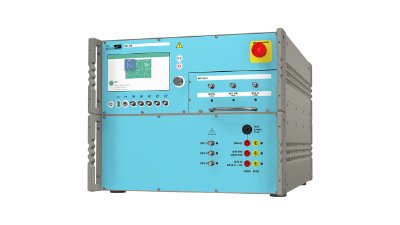
EMC Partner AVI-LV3 Indirect Lightning Generator
- RTCA/DO-160G S22
- MIL-STD-461G CS117
- Cable Induction (CI)

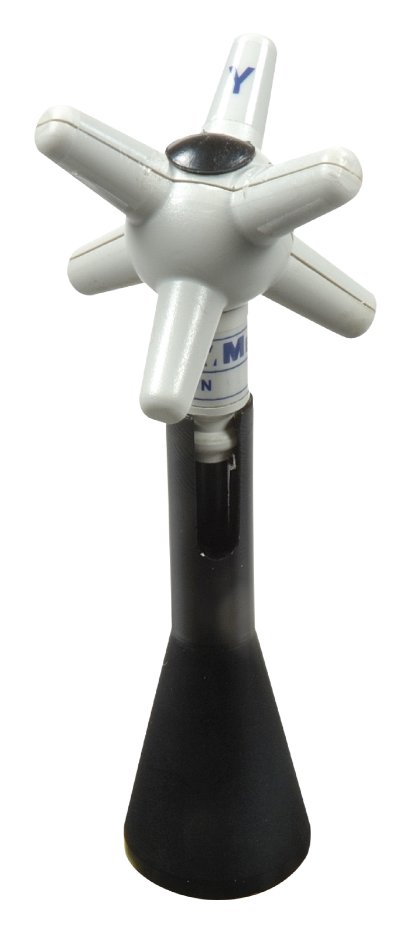
PMM EP-600 Electric Field Probe Series | 5 kHz – 26.5 GHz
- Frequency Range: 5 kHz to 26.5 GHz
- Sensitivity: 0.4 - 1500 V/m
- Battery Powered

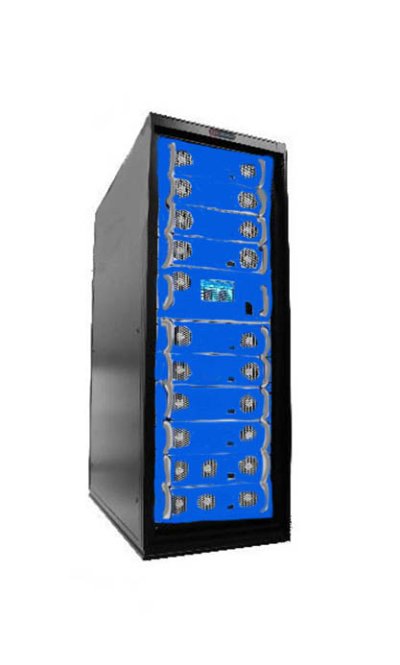
Advanced Amplifiers AA-10K250M-2500 Solid-State Amplifier
- 10 kHz - 250 MHz
- 2500 W
- 64 dB min

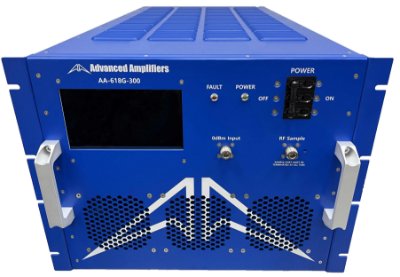
Advanced Amplifiers AA-618G-300 Solid State Amplifier
- 6.0 - 18.0 GHz
- 300 W
- 55 dB min
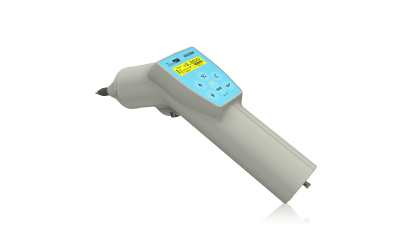
EMC Partner ESD3000 ESD Gun
- Voltage: 16kV, 30kV
- Contact Discharge: 1kV - 30kV
- Air Discharge: 1kV - 32kV