


MIL
MIL-STD-188-125-2: HEMP Protection for Ground-Based C41 Facilities Performing Critical Missions...
MIL-STD-188-125-2 Standard Overview
MIL-STD-188-125-2 establishes minimum requirements and design objectives for high-altitude electromagnetic pulse (HEMP) hardening of transportable ground-based systems that perform critical, time-urgent command, control, communications, computer, and intelligence (C4I) missions.
MIL-STD-188-125-2 prescribes minimum performance requirements for low-risk protection from mission-aborting damage or upset due to HEMP threat environments defined in MIL-STD-2169. The standard also addresses minimum testing requirements for demonstrating that prescribed performance has been achieved and for verifying that the installed protection measures provide the operationally required HEMP hardness for the completed system. If the prescribed testing results in any hardware damage or functional upsets, the operational authority for the system will make the determination whether the observed event is mission aborting.
MIL-STD-188-125-2 defines the design and testing criteria for specifically designated transportable ground-based systems in HEMP-hardened, critical, time-urgent C4I networks. Such systems include subscriber terminals and data processing centers, transmitting and receiving communications stations, and relay systems. The standard applies to both new systems and modifications of existing systems. Although only local portions of system interconnects are addressed, it is assumed that survivable long-haul communications paths, fiberoptic links, or other hardened interconnects between systems will be provided as required for mission accomplishment.
Survivable C4I capabilities are essential to a credible military deterrent. This standard supports nuclear survivability objectives by providing a standardized, low-risk protection approach for transportable ground-based systems in HEMP-hardened C4I networks. These uniform requirements ensure balanced HEMP hardening for all critical systems and facilities in the network.
Download Standard
MIL-STD-188-125-2 prescribes minimum performance requirements for low-risk protection from mission-aborting damage or upset due to HEMP threat environments defined in MIL-STD-2169. The standard also addresses minimum testing requirements for demonstrating that prescribed performance has been achieved and for verifying that the installed protection measures provide the operationally required HEMP hardness for the completed system. If the prescribed testing results in any hardware damage or functional upsets, the operational authority for the system will make the determination whether the observed event is mission aborting.
MIL-STD-188-125-2 defines the design and testing criteria for specifically designated transportable ground-based systems in HEMP-hardened, critical, time-urgent C4I networks. Such systems include subscriber terminals and data processing centers, transmitting and receiving communications stations, and relay systems. The standard applies to both new systems and modifications of existing systems. Although only local portions of system interconnects are addressed, it is assumed that survivable long-haul communications paths, fiberoptic links, or other hardened interconnects between systems will be provided as required for mission accomplishment.
Survivable C4I capabilities are essential to a credible military deterrent. This standard supports nuclear survivability objectives by providing a standardized, low-risk protection approach for transportable ground-based systems in HEMP-hardened C4I networks. These uniform requirements ensure balanced HEMP hardening for all critical systems and facilities in the network.
Download Standard
Products Used in Testing
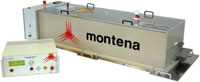
Montena EMP300K-5-500 Short Pulse Generator | 350 kV
- Short pulse generator
- Evaluates conductive entries and protective devices per MIL-STD188-125-1/2
- Short double exponential current pulses up to 5 kA

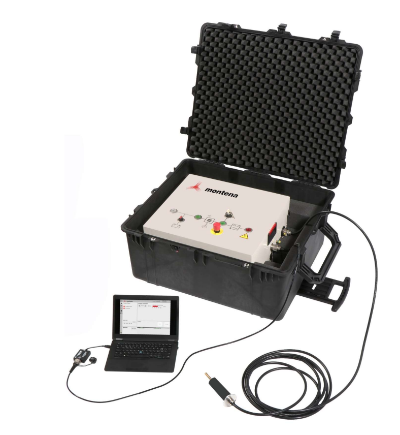
Montena PPG-E1-1200 Portable Pulse Generator for MIL-STD-188-125
- A wide operating range from 50 A to 1.2 kA
- Dedicated control software application for the configuration of the generator and the measurement equipment
- Battery powered, especially designed for tests onsite
Related MIL Standards
Explore All Standards
MIL-STD-461
MIL-STD-461F: Electromagnetic Interference Characteristics of Equipment
MIL-STD-461G: Electromagnetic Interference Characteristics of Equipment
MIL-STD-461G CE101, CE102: Conducted Emissions, Audio Frequency Currents and Radio Frequency...
MIL-STD-461G CE106: Conducted Emissions, Antenna Port
MIL-STD-461G CS101: Conducted Susceptibility, Power Leads
MIL-STD-461G CS103: Conducted Susceptibility, Antenna Port, Intermodulation
MIL-STD-461G CS104: Conducted Susceptibility, Antenna Port, Rejection of Undesired Signals
MIL-STD-461G CS105: Conducted Susceptibility, Antenna Port, Cross-Modulation
MIL-STD-461G CS106: Conducted Susceptibility, Transients, Power Leads
MIL-STD-461G CS109: Conducted Susceptibility, Structure Current
MIL-STD-461G CS114: Conducted Susceptibility, Bulk Cable Injection
MIL-STD-461G CS115: Conducted Susceptibility, Bulk Cable Injection, Impulse Excitation
MIL-STD-461G CS116: Conducted Susceptibility, Damped Sinusoidal Transients, Cables and Power Leads
MIL-STD-461G CS117: Conducted Susceptibility, Lightning Induced Transients, Cables and Power Leads
MIL-STD-461G CS118: Personnel Borne Electrostatic Discharge (ESD)
MIL-STD-461G RE101: Radiated Emissions, Magnetic Field
MIL-STD-461G RE102: Radiated Emissions, Electric Field
MIL-STD-461G RE103: Radiated Emissions, Antenna Outputs
MIL-STD-461G RS101: Radiated Susceptibility, Magnetic Field
MIL-STD-461G RS103: Radiated Susceptibility, Electric Field
MIL-STD-461G RS105: Radiated Susceptibility, Transient Electromagnetic Field, or EMP...
MIL-STD-464: RF Environmental Effects on Systems
MIL-STD-704: Aircraft Electric Power Characteristics
MIL-STD-750: Test Methods for Semiconductor Devices
MIL-STD-810G: Test Method Standard for Environmental Engineering Considerations and Laboratory Tests
MIL-STD-883: Test Method Standard, Microcircuits
MIL-STD-1275: Characteristics of 28 Volt DC Input Power to Military Vehicles
MIL-STD-1399-300: Interface Standard for Shipboard Systems
MIL-STD-1553: Aircraft Internal Time Division Command/Response Multiplex Data Bus
MIL-STD-1576: Electroexplosive Subsystem Safety Requirements and Test Methods For Space Systems