

Ask us about
test equipment solutions for your industry
Understanding AC vs DC Hipot Testing


High potential, or hipot, testing is generally used to test the dielectric strength of insulation to ensure the ground wall can handle over-voltage situations. An over-voltage is a voltage that is higher than the DUT’s (device under test’s) peak line-to-line operating voltage, which is typically 1.41 x RMS voltage. If left untested, these over-voltages can damage or reduce the lifespan of the DUT, create blackouts, data loss, or IT system failures.
Hipot testing can be used for low voltage devices, as well as high voltage equipment. There are a variety of factors that help those performing the test decide what hipots apply to their specific needs, specifically, whether they need to use an AC hipot, or a DC hipot. Keep reading this blog to learn more about the comparison between AC and DC hipots and their distinct use cases.
-HIPO-120HVT-Understanding-AC-vs-DC-Hipot-Testing-Blog.png)
AC Hipot Testing
- General AC devices
- Double-insulated products
- Medical devices
- Capacitive loads
- Identifying partial discharges
- Solar PV modules, inverters (Could use DC testing depending on Specs)
-Phenix-PAD10-25-Understanding-AC-vs-DC-Hipot-Testing-Blog.png)
DC Hipot Testing
- High-voltage cables and harnesses
- Devices with large capacitors or EMI Filters
- Solar PV modules, inverters (Could use AC testing depending on specs)
- Detecting absorption current
- Stress testing insulation
Comparing AC and DC Hipot Testing
Each form of Hipot testing has its pros and cons depending on the situation they are being used for. Their differences are what make them applicable to different types of equipment.
How ATEC Can Help
ATEC rents a variety of AC and DC Hipot testers from leading manufacturers such as High Voltage Inc. and HV Diagnostics. Reach out to ATEC today to learn more about our broad inventory of Hipot testers.
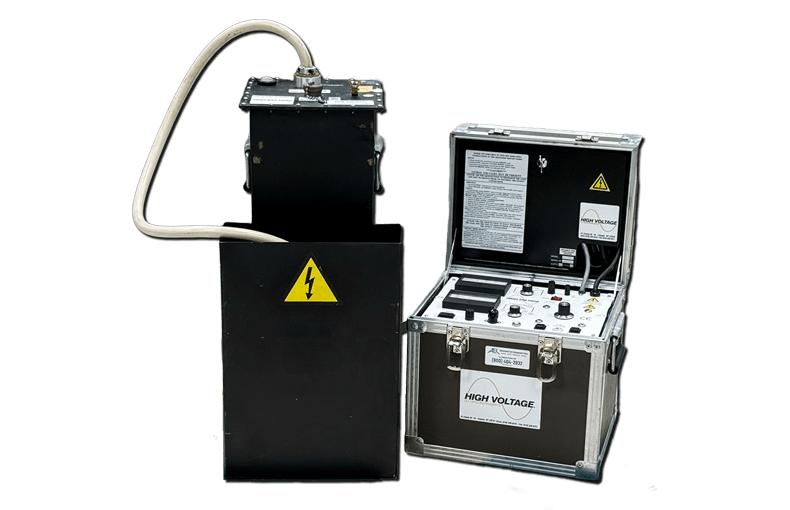
High Voltage PTS-200
- 0 - 200kV DC @ 5mA
- Negative Polarity
- Positive Ground
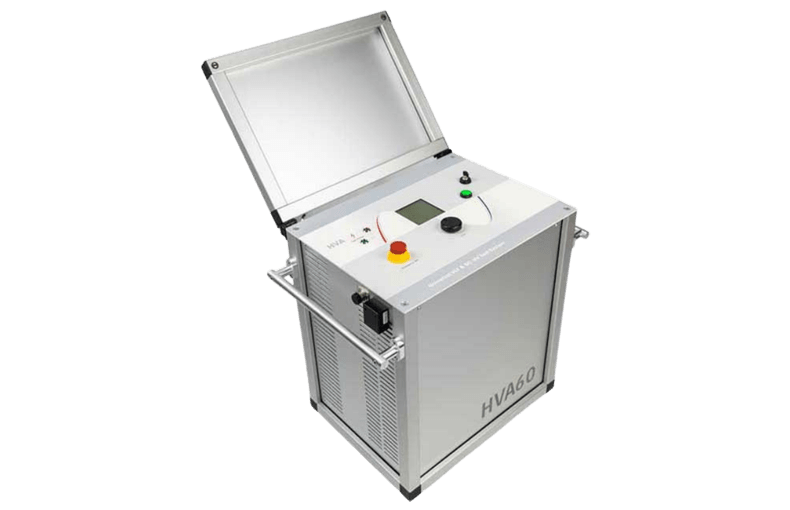
HV Diagnostics HVA60
- 62kV peak
- 44kV RMS @ 40mA
- Positive and Negative Polarity
-Understanding-AC-vs-DC-Hipot-Testing-Blog.png)
High Voltage PFT-1003CM
- 0 - 100kV AC
- Up to 30mA Current
- 3kVA: 1 hour ON, 1 hour OFF