


MIL
MIL-STD-883: Test Method Standard, Microcircuits
MIL-STD-883 Standard Overview
MIL-STD-883 establishes uniform methods, controls, and procedures for testing microelectronic devices suitable for use within Military and Aerospace electronic systems including basic environmental tests to determine resistance to deleterious effects of natural elements and conditions surrounding military and space operations; mechanical and electrical tests; workmanship and training procedures; and such other controls and constraints as have been deemed necessary to ensure a uniform level of quality and reliability suitable to the intended applications of those devices. For the purpose of this standard, the term "devices" includes such items as monolithic, multichip, film and hybrid microcircuits, microcircuit arrays, and the elements from which the circuits and arrays are formed. MIL-STD-883 is intended to apply only to microelectronic devices. The test methods, controls, and procedures described in MIL-STD-883 have been prepared to serve several purposes:
a. To specify suitable conditions obtainable in the laboratory and at the device level which give test results equivalent to the actual service conditions existing in the field, and to obtain reproducibility of the results of tests. The tests described herein are not to be interpreted as an exact and conclusive representation of actual service operation in any one geographic or outer space location. This is because it is known that the only true test for operation in a specific application and location is an actual service test under the same conditions.
b. To describe in one standard all of the test methods of a similar character which now appear in the various joint-services and NASA microelectronic device specifications, so that these methods may be kept uniform and thus result in conservation of equipment, many hours, and testing facilities. In achieving this objective, it is necessary to make each of the general tests adaptable to a broad range of devices.
c. To provide for a level of uniformity of physical, electrical and environmental testing; manufacturing controls and workmanship; and materials to ensure consistent quality and reliability among all devices screened in accordance with this standard.
Download Standard
a. To specify suitable conditions obtainable in the laboratory and at the device level which give test results equivalent to the actual service conditions existing in the field, and to obtain reproducibility of the results of tests. The tests described herein are not to be interpreted as an exact and conclusive representation of actual service operation in any one geographic or outer space location. This is because it is known that the only true test for operation in a specific application and location is an actual service test under the same conditions.
b. To describe in one standard all of the test methods of a similar character which now appear in the various joint-services and NASA microelectronic device specifications, so that these methods may be kept uniform and thus result in conservation of equipment, many hours, and testing facilities. In achieving this objective, it is necessary to make each of the general tests adaptable to a broad range of devices.
c. To provide for a level of uniformity of physical, electrical and environmental testing; manufacturing controls and workmanship; and materials to ensure consistent quality and reliability among all devices screened in accordance with this standard.
Download Standard
Products Used in Testing
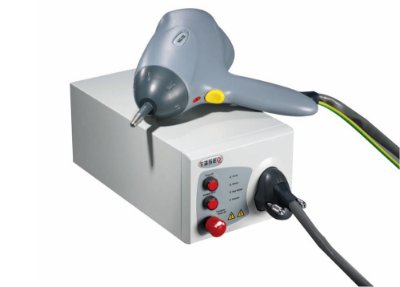
Teseq NSG 438 ESD Gun
- Voltage: 30kV
- Contact Discharge: 200V - 30kV
- Air Discharge: 200V - 30kV

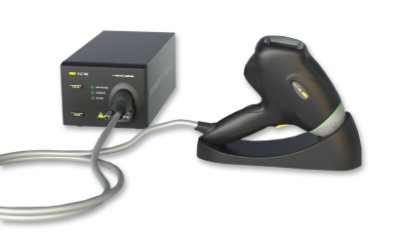
EM Test ESD NX30 | 30 kV
- Test voltage up to 30 kV for air and contact discharge
- Color touch display
- Discharges up to 25 Hz

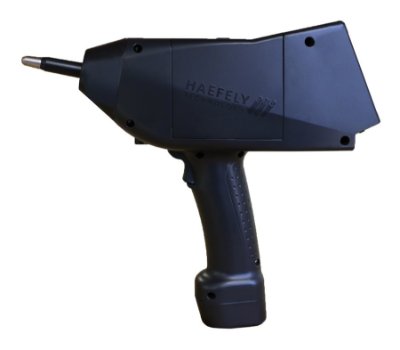
Haefely ONYX 30 Electrostatic Discharge Simulator
- Voltage: 30kV
- Air Discharge: 1kV - 30kV
- Contact Discharge: 1kV - 30kV

Related MIL Standards
Explore All Standards
MIL-STD-188-125-2: HEMP Protection for Ground-Based C41 Facilities Performing Critical Missions...
MIL-STD-461
MIL-STD-461F: Electromagnetic Interference Characteristics of Equipment
MIL-STD-461G: Electromagnetic Interference Characteristics of Equipment
MIL-STD-461G CE101, CE102: Conducted Emissions, Audio Frequency Currents and Radio Frequency...
MIL-STD-461G CE106: Conducted Emissions, Antenna Port
MIL-STD-461G CS101: Conducted Susceptibility, Power Leads
MIL-STD-461G CS103: Conducted Susceptibility, Antenna Port, Intermodulation
MIL-STD-461G CS104: Conducted Susceptibility, Antenna Port, Rejection of Undesired Signals
MIL-STD-461G CS105: Conducted Susceptibility, Antenna Port, Cross-Modulation
MIL-STD-461G CS106: Conducted Susceptibility, Transients, Power Leads
MIL-STD-461G CS109: Conducted Susceptibility, Structure Current
MIL-STD-461G CS114: Conducted Susceptibility, Bulk Cable Injection
MIL-STD-461G CS115: Conducted Susceptibility, Bulk Cable Injection, Impulse Excitation
MIL-STD-461G CS116: Conducted Susceptibility, Damped Sinusoidal Transients, Cables and Power Leads
MIL-STD-461G CS117: Conducted Susceptibility, Lightning Induced Transients, Cables and Power Leads
MIL-STD-461G CS118: Personnel Borne Electrostatic Discharge (ESD)
MIL-STD-461G RE101: Radiated Emissions, Magnetic Field
MIL-STD-461G RE102: Radiated Emissions, Electric Field
MIL-STD-461G RE103: Radiated Emissions, Antenna Outputs
MIL-STD-461G RS101: Radiated Susceptibility, Magnetic Field
MIL-STD-461G RS103: Radiated Susceptibility, Electric Field
MIL-STD-461G RS105: Radiated Susceptibility, Transient Electromagnetic Field, or EMP...
MIL-STD-464: RF Environmental Effects on Systems
MIL-STD-704: Aircraft Electric Power Characteristics
MIL-STD-750: Test Methods for Semiconductor Devices
MIL-STD-810G: Test Method Standard for Environmental Engineering Considerations and Laboratory Tests
MIL-STD-1275: Characteristics of 28 Volt DC Input Power to Military Vehicles
MIL-STD-1399-300: Interface Standard for Shipboard Systems
MIL-STD-1553: Aircraft Internal Time Division Command/Response Multiplex Data Bus
MIL-STD-1576: Electroexplosive Subsystem Safety Requirements and Test Methods For Space Systems