

Ask us about
test equipment solutions for your industry
Thermocouple RF Probes for High-Peak Pulsed Signals: Why They’re Preferred

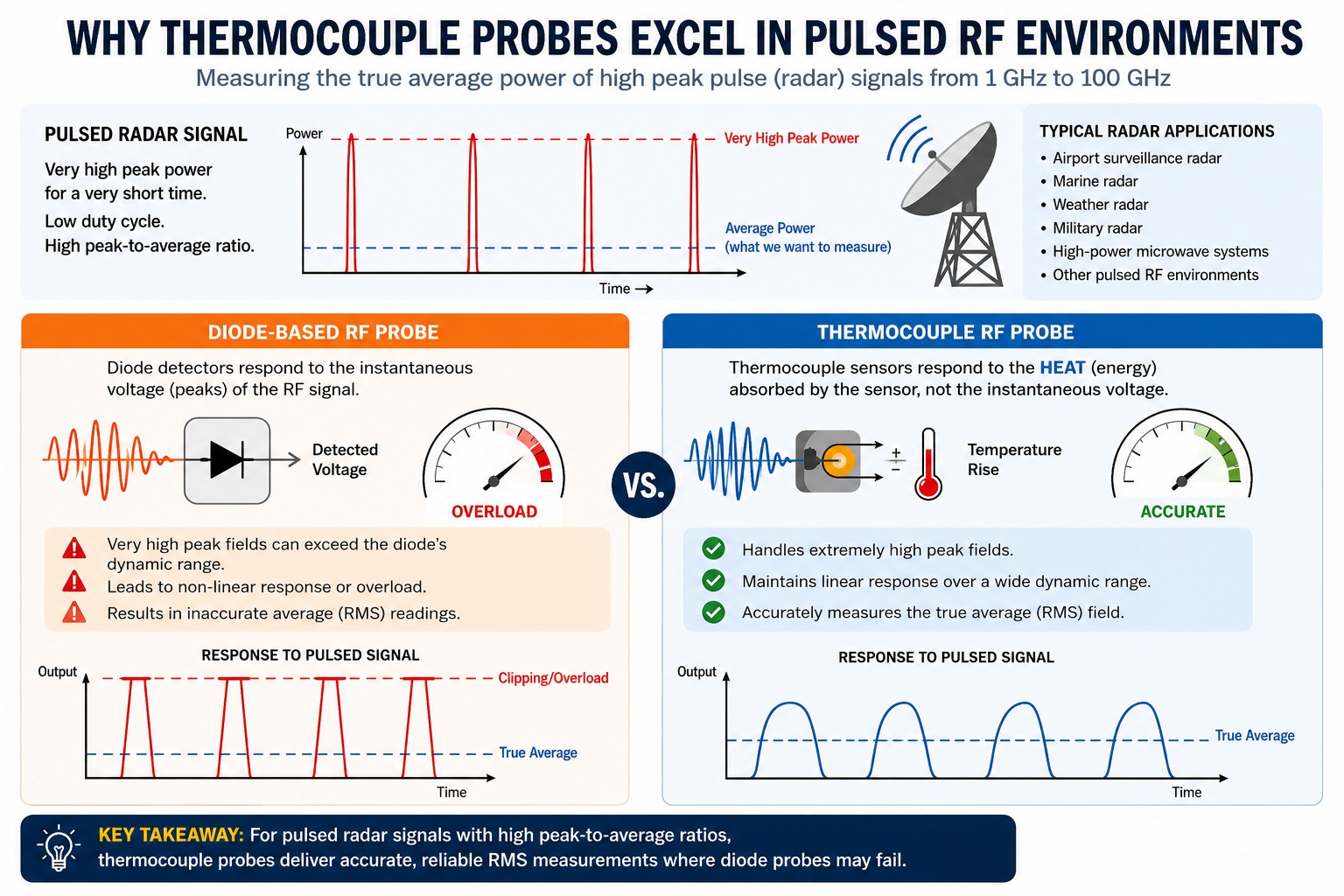
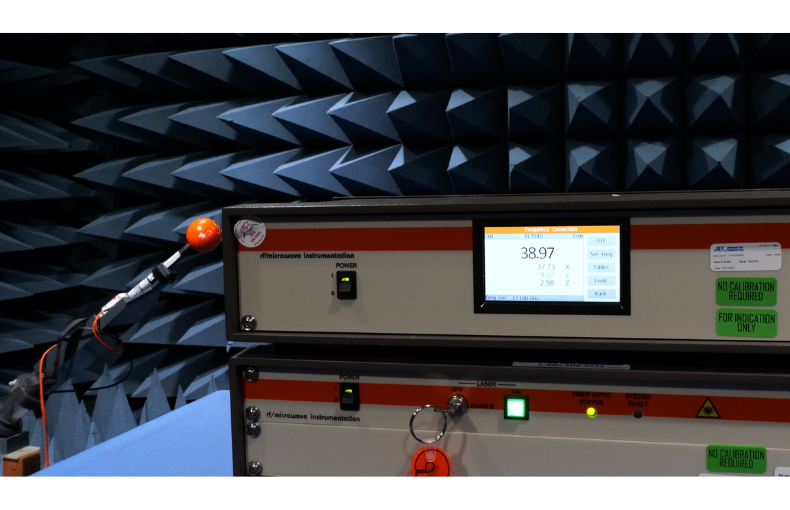
Modern radar systems can produce very high peak electric field strengths while maintaining relatively modest average power. This happens because the transmitter is active only during brief portions of each pulse cycle, creating short bursts of high-intensity RF energy rather than a continuous signal.
RF field probes measure pulsed microwave signals, but not all probes deliver the same level of accuracy. Even when their specifications are identical, the type of RF field probe used can affect measurement accuracy and may prevent users from obtaining fully accurate results.
While each type of RF field probe serves a specific purpose, thermocouple RF field probes are generally preferred over diode-based RF field probes when highly accurate, granular measurements are required in demanding pulsed RF environments. Their ability to provide precise readings makes them well suited for applications where measurement accuracy is critical.
RF field probes measure pulsed microwave signals, but not all probes deliver the same level of accuracy. Even when their specifications are identical, the type of RF field probe used can affect measurement accuracy and may prevent users from obtaining fully accurate results.
While each type of RF field probe serves a specific purpose, thermocouple RF field probes are generally preferred over diode-based RF field probes when highly accurate, granular measurements are required in demanding pulsed RF environments. Their ability to provide precise readings makes them well suited for applications where measurement accuracy is critical.
What is a Diode-Based Probe
Diode-based RF field probes are the most commonly used type of RF field probe and are widely employed in EMC testing and RF measurement applications. Their broad dynamic range and high sensitivity make them well suited for measuring a variety of RF environments.
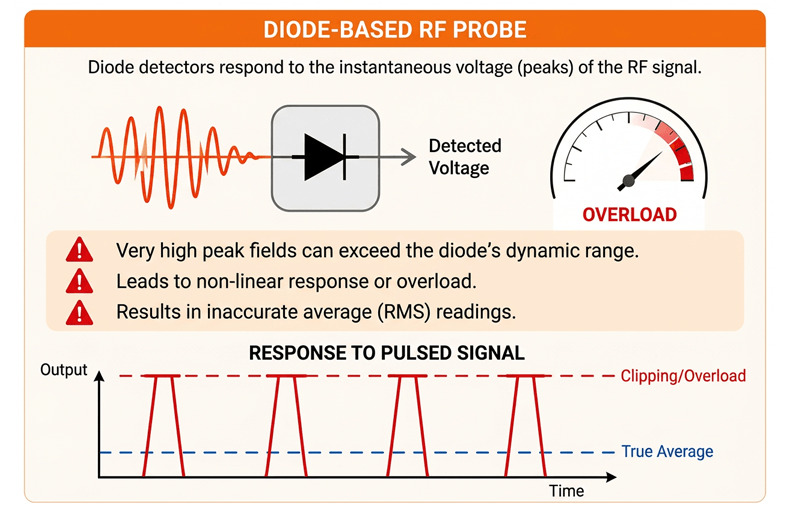
Unlike thermocouple probes, diode-based probes measure pulsed RF signals by responding to the instantaneous voltage peaks of an RF waveform. However, these detectors have a finite dynamic range. If signal peaks exceed the probe's measurement capabilities, the device may become overloaded or exhibit non-linear behavior, reducing measurement accuracy.
When signal peaks fall outside the probe's detection range, they can no longer be measured accurately. As a result, while diode-based RF field probes are effective for many RF testing applications, thermocouple RF field probes are often the preferred choice when highly precise and accurate measurements are required in demanding pulsed RF environments.
Unlike thermocouple probes, diode-based probes measure pulsed RF signals by responding to the instantaneous voltage peaks of an RF waveform. However, these detectors have a finite dynamic range. If signal peaks exceed the probe's measurement capabilities, the device may become overloaded or exhibit non-linear behavior, reducing measurement accuracy.
When signal peaks fall outside the probe's detection range, they can no longer be measured accurately. As a result, while diode-based RF field probes are effective for many RF testing applications, thermocouple RF field probes are often the preferred choice when highly precise and accurate measurements are required in demanding pulsed RF environments.
What is a Thermocouple Probe
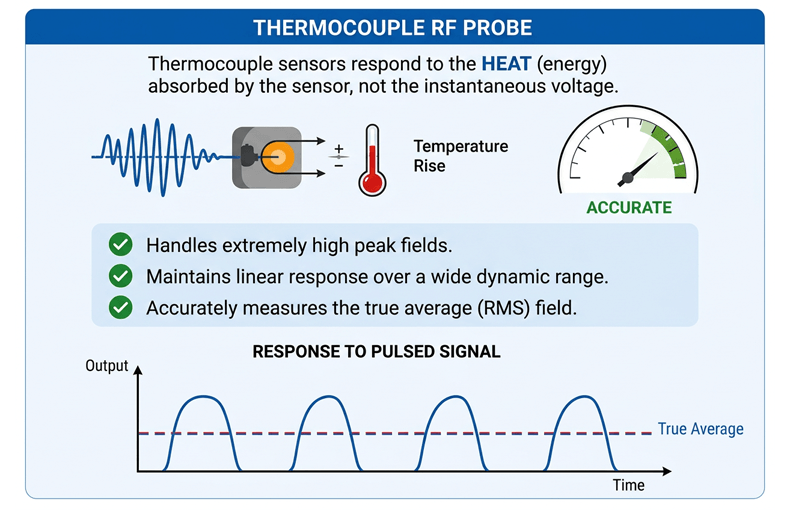
Thermocouple RF field probes are commonly used in high-precision radar applications, including military systems, airport surveillance, and marine radar testing. Unlike diode-based probes, which measure the voltage peaks of an RF waveform, thermocouple probes measure the total RF energy by converting it into heat and monitoring the resulting temperature increase. This approach allows them to maintain excellent linearity, even in environments with high peak-to-average power ratios. Because their accuracy is based on the total energy of the signal rather than individual peaks falling within a limited dynamic range, thermocouple probes provide more reliable and precise measurements in demanding pulsed RF environments.
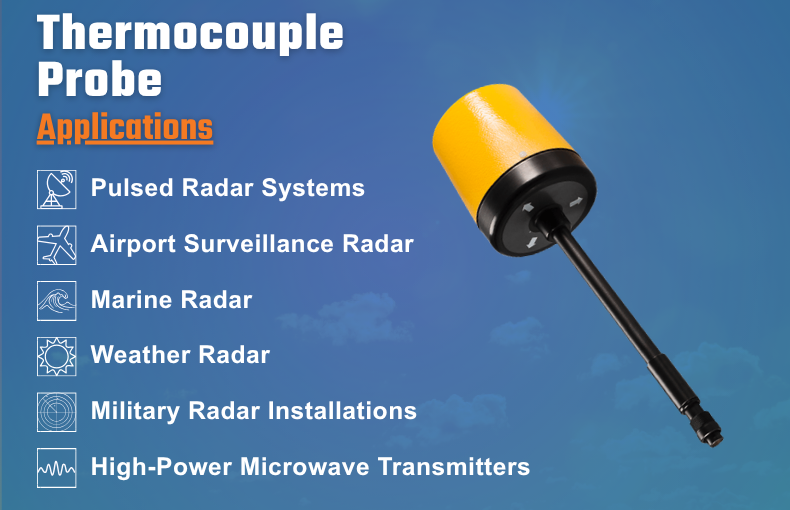
Thermocouple vs. Diode Probes
Diode-based RF field probes are the most commonly used probes for EMC and RF measurement applications due to their high sensitivity and wide dynamic range. However, because they measure the instantaneous voltage peaks of an RF waveform, their accuracy can be affected when measuring pulsed or modulated signals. If the signal's peak levels exceed the probe's measurement capabilities, the probe may become overloaded or exhibit non-linear behavior, leading to less accurate results in high-peak pulse environments such as radar systems.
Thermocouple RF field probes, on the other hand, measure RF energy by converting it into heat and monitoring the resulting temperature increase. Because they respond to the total energy of the RF signal rather than individual voltage peaks, they maintain excellent linearity in pulsed and modulated RF environments. While thermocouple probes typically have a slower response time than diode-based probes, they provide highly accurate true RMS measurements and are often preferred for military, defense, aerospace, and radar testing applications where measurement precision is critical. Their ability to accurately assess RF exposure levels also makes them valuable for EMF safety evaluations, helping ensure personnel are not exposed to excessive RF radiation in high-power environments.
Thermocouple RF field probes, on the other hand, measure RF energy by converting it into heat and monitoring the resulting temperature increase. Because they respond to the total energy of the RF signal rather than individual voltage peaks, they maintain excellent linearity in pulsed and modulated RF environments. While thermocouple probes typically have a slower response time than diode-based probes, they provide highly accurate true RMS measurements and are often preferred for military, defense, aerospace, and radar testing applications where measurement precision is critical. Their ability to accurately assess RF exposure levels also makes them valuable for EMF safety evaluations, helping ensure personnel are not exposed to excessive RF radiation in high-power environments.
How ATEC Can Help You
Finding the right thermocouple RF field probe can be critical when measurement accuracy is on the line. ATEC supports engineers, researchers, and safety professionals with rental and sales solutions from industry-leading manufacturers such as Narda, helping ensure reliable results in demanding RF environments.
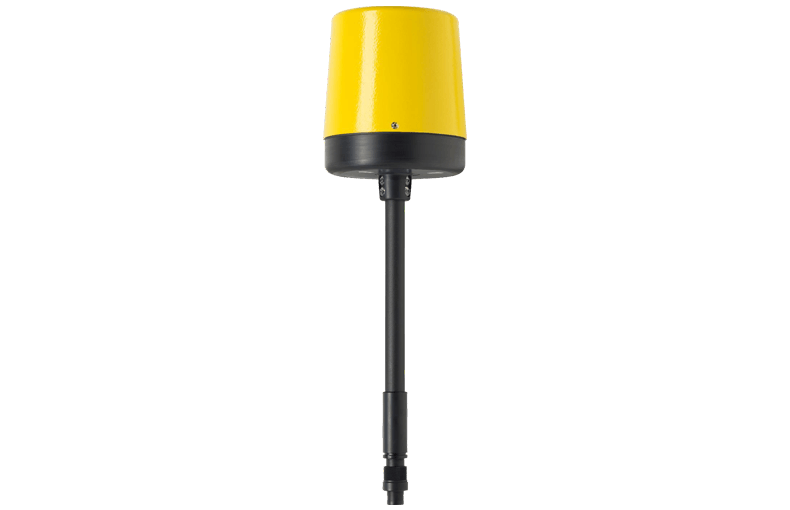
Narda EAD-5091
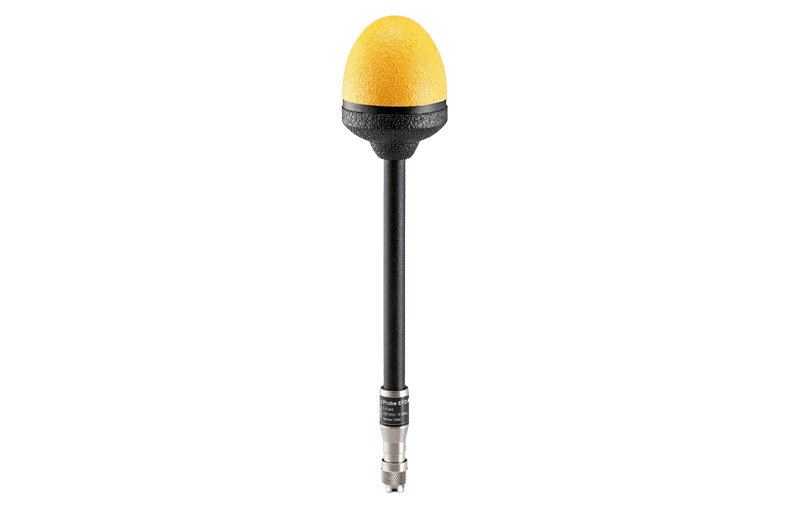
Narda EFD-5091 E-Field Probe | 2462/03B
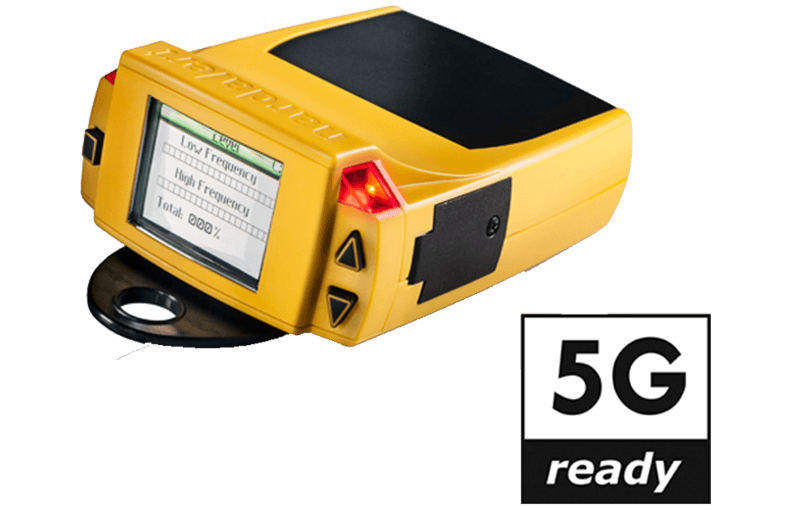
Narda Nardalert S3 Personal RF Monitor
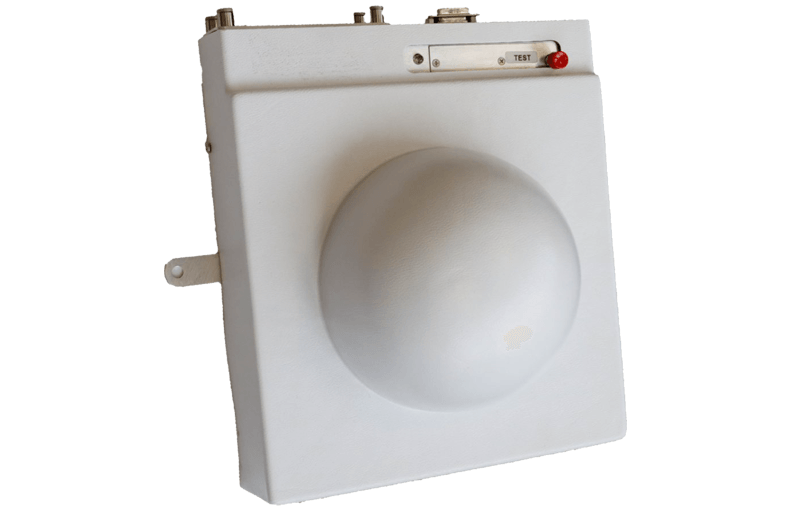
Narda SMARTS II Surveillance Monitor, IEEE C8830
Posted August 13, 2026