

MIL
MIL-STD-1399-300: Interface Standard for Shipboard Systems
MIL-STD-1399-300 Standard Overview
MIL-STD-1399-300 establishes electrical interface characteristics for shipboard equipment utilizing AC electric power to ensure compatibility between the user equipment and the electric power system. In MIL-STD-1399-300, characteristics of the electric power system are defined and tolerances are established, as well as requirements and test methods for ensuring compatibility of the shipboard user equipment with the power system. The policies and procedures established by MIL-STD-1399-300 are mandatory. This section and the basic standard are to be viewed as an integral single document for use in the design and testing of electric power systems and user equipment. This standard supersedes MIL-STD-1399-103.
Type I - Type I power is 440 or 115 volts (V), 60 hertz (Hz) ungrounded and is the standard shipboard electric power source. Type I power is used unless a deviation is granted
Type II - Type II power is 440 or 115 V, 400 Hz ungrounded and has only limited application. Use of Type II power requires the submittal and approval of a deviation request
Type III - Type III power is 440 or 115 V, 400 Hz ungrounded having tighter tolerances as compared to Type II. Type III power has restricted use and its use requires the submittal and approval of a deviation request
Type I - Type I power is 115/200 V, 60 Hz, 3-phase, 4-wire, wye-grounded. This power is only provided for avionic shops.
Type III - Type III power is 115/200 V, 400 Hz, 3-phase, 4-wire, wye-grounded. This power is only provided for avionic shops and for aircraft servicing.
Type I - Type I power is 230 V, 60 Hz, 3-phase, ungrounded or 230 V, 60 Hz, single-phase, grounded or ungrounded. Its tolerances are the same as for Type I power as described in Table I except that the spike voltage will be at 1400 V peak.
For types of shipboard electric power supplied for specific industrial equipment such as washers, dryers, etc., see NAVSEA Drawings 7512881 for 120/208 Vrms loads and 7598285 for 120/240 Vrms loads. Non-standard power should comply with Type I tolerances. See 5.2.4.1 NOTE for Human Body Leakage current-voltage and frequency limits.
Download Standard
Classification
In accordance with the MIL-STD-1399-300, the types of shipboard electric power to be supplied from the electric power system are classified as low voltage as follows:Type I - Type I power is 440 or 115 volts (V), 60 hertz (Hz) ungrounded and is the standard shipboard electric power source. Type I power is used unless a deviation is granted
Type II - Type II power is 440 or 115 V, 400 Hz ungrounded and has only limited application. Use of Type II power requires the submittal and approval of a deviation request
Type III - Type III power is 440 or 115 V, 400 Hz ungrounded having tighter tolerances as compared to Type II. Type III power has restricted use and its use requires the submittal and approval of a deviation request
Special power classification for avionic shops and aircraft servicing
Types of shipboard electric power only for avionic shops and aircraft servicing are as follows:Type I - Type I power is 115/200 V, 60 Hz, 3-phase, 4-wire, wye-grounded. This power is only provided for avionic shops.
Type III - Type III power is 115/200 V, 400 Hz, 3-phase, 4-wire, wye-grounded. This power is only provided for avionic shops and for aircraft servicing.
Special power classification for NATO load equipment
Types of shipboard electric power supplied only for NATO load equipment are as follows:Type I - Type I power is 230 V, 60 Hz, 3-phase, ungrounded or 230 V, 60 Hz, single-phase, grounded or ungrounded. Its tolerances are the same as for Type I power as described in Table I except that the spike voltage will be at 1400 V peak.
Special non-standard power
For types of shipboard electric power supplied for specific industrial equipment such as washers, dryers, etc., see NAVSEA Drawings 7512881 for 120/208 Vrms loads and 7598285 for 120/240 Vrms loads. Non-standard power should comply with Type I tolerances. See 5.2.4.1 NOTE for Human Body Leakage current-voltage and frequency limits.Download Standard
Products Used in Testing
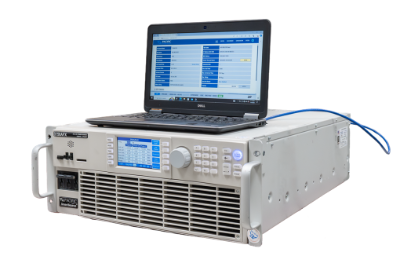
Pacific Power 3150AFX AC & DC Programmable Power Source
- Frequency: DC, 15 – 1,200 Hz
- Accuracy: ± 0.01%
- 125 Arms / 62.5 ADC

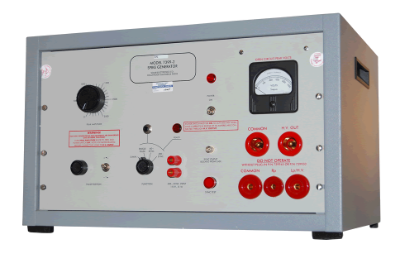
Solar 7399-2 2,500 Volt Spike Generator for MIL-STD-1399
- Repetitive spikes up to 2500 volts peak at two pulses per minute.
- Single non-synchronous spike actuated by a push button on the panel.
- Sync functions provide for placing the spike on the power frequency waveform of 50, 60 or 400 Hz power lines. The spike can be moved to any point of the sine wave from 0 to 360°

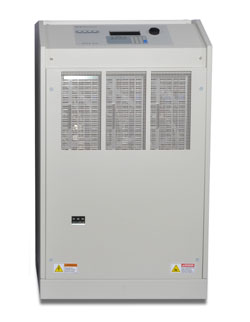
California Instruments MX45 AC Power Source
- Power: 45kVA
- Voltage: 300V (AC), 400V (DC)
- Current: 100A

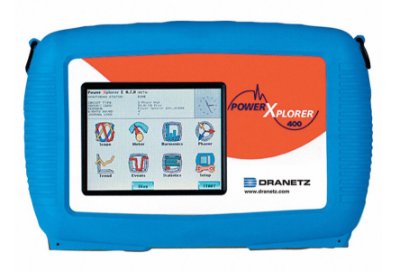
Dranetz PX5-400 Power Analyzer
- Tests at 50/60 and 400Hz
- Meets MIL Standard 1399 testing
- Eight channels, 4 voltage & 4 current

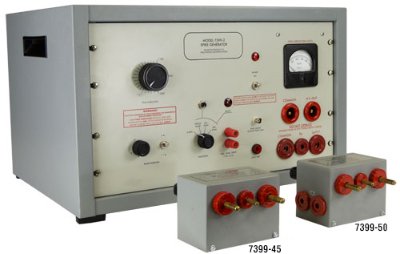
Solar Electronics 7399-3 Spike Generator
- Repetitive spikes up to 2500 V peak at two pulses per minute
- Single non-synchronous spike actuated by a pushbutton on the panel
- Sync functions provide for placing the spike on the power frequency waveform of 50, 60 or 400 Hz power lines; the spike can be moved to any point on the sine wave from 0 to 360°
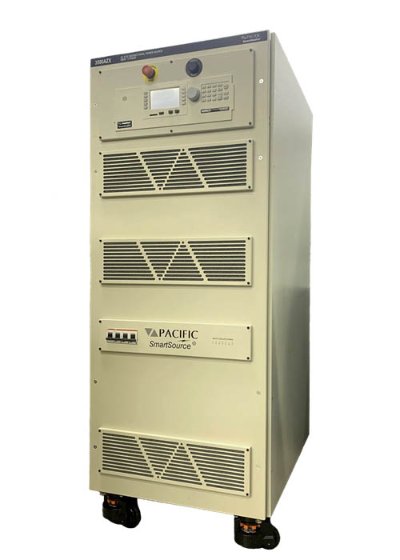
Pacific Power 3550AZX Regenerative AC & DC Power Source
- Power: 55kVA/kW
- 0-240 Vac L-N / 0-415 Vac L-L
- Current: 225ARMS, 150ADC
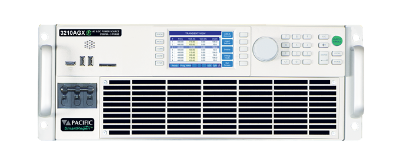
Pacific Power 3210AGX | AC & DC Load/Power Supply | 21 kVA
- Power: 21kW/kVA
- Voltage: 350VAC, 500VDC
- Current: 21ADC
Related MIL Standards
Explore All Standards
MIL-STD-188-125-2: HEMP Protection for Ground-Based C41 Facilities Performing Critical Missions...
MIL-STD-461
MIL-STD-461F: Electromagnetic Interference Characteristics of Equipment
MIL-STD-461G: Electromagnetic Interference Characteristics of Equipment
MIL-STD-461G CE101, CE102: Conducted Emissions, Audio Frequency Currents and Radio Frequency...
MIL-STD-461G CE106: Conducted Emissions, Antenna Port
MIL-STD-461G CS101: Conducted Susceptibility, Power Leads
MIL-STD-461G CS103: Conducted Susceptibility, Antenna Port, Intermodulation
MIL-STD-461G CS104: Conducted Susceptibility, Antenna Port, Rejection of Undesired Signals
MIL-STD-461G CS105: Conducted Susceptibility, Antenna Port, Cross-Modulation
MIL-STD-461G CS106: Conducted Susceptibility, Transients, Power Leads
MIL-STD-461G CS109: Conducted Susceptibility, Structure Current
MIL-STD-461G CS114: Conducted Susceptibility, Bulk Cable Injection
MIL-STD-461G CS115: Conducted Susceptibility, Bulk Cable Injection, Impulse Excitation
MIL-STD-461G CS116: Conducted Susceptibility, Damped Sinusoidal Transients, Cables and Power Leads
MIL-STD-461G CS117: Conducted Susceptibility, Lightning Induced Transients, Cables and Power Leads
MIL-STD-461G CS118: Personnel Borne Electrostatic Discharge (ESD)
MIL-STD-461G RE101: Radiated Emissions, Magnetic Field
MIL-STD-461G RE102: Radiated Emissions, Electric Field
MIL-STD-461G RE103: Radiated Emissions, Antenna Outputs
MIL-STD-461G RS101: Radiated Susceptibility, Magnetic Field
MIL-STD-461G RS103: Radiated Susceptibility, Electric Field
MIL-STD-461G RS105: Radiated Susceptibility, Transient Electromagnetic Field, or EMP...
MIL-STD-464: RF Environmental Effects on Systems
MIL-STD-704: Aircraft Electric Power Characteristics
MIL-STD-750: Test Methods for Semiconductor Devices
MIL-STD-810G: Test Method Standard for Environmental Engineering Considerations and Laboratory Tests
MIL-STD-883: Test Method Standard, Microcircuits
MIL-STD-1275: Characteristics of 28 Volt DC Input Power to Military Vehicles
MIL-STD-1553: Aircraft Internal Time Division Command/Response Multiplex Data Bus
MIL-STD-1576: Electroexplosive Subsystem Safety Requirements and Test Methods For Space Systems